














The essence of modern quality management is not post-inspection, but prevention and continuous improvement centered on statistics. By applying SPC (Statistical Process Control) and Six Sigma methodologies, sensory inspection is transformed into quantifiable data. In modern manufacturing systems, standards, measurement, and statistics are indispensable; they upgrade quality management from a craft to a predictable and controllable science.
Many manufacturing enterprises deploy a large number of quality inspectors on the production line, yet they still cannot reduce scrap rates and customer complaint costs. The real problem lies in relying on the empirical judgment of human eyes and feel, which is essentially post-detection. In the highly complex Industry 4.0 era, a shortcut to achieving breakthroughs in yield rates is deploying a modern SPC system, translating discrete numbers obtained from measurements into statistically significant data.
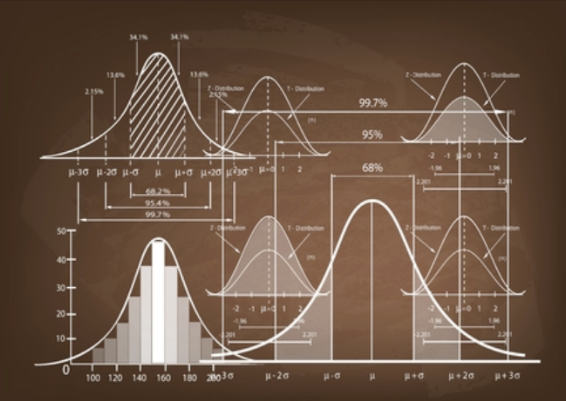
Bidding Farewell to Sensory Inspection: Transforming Numbers into Scientific Decisions
In traditional workshops, the quality of products often depends on the experience of workers. However, human senses are highly subjective and imprecise; they cannot maintain stability at micron-level machining precision. Modern high-precision measurement technology can accurately quantify product characteristics into numbers, but this is only the first step. A long string of discrete numbers is meaningless if it exists in isolation. Introducing statistics can give these numbers real meaning. By describing data distribution types, standard deviations, and mean shifts, along with SPC control charts and process capability, statistics helps quality engineers analyze the underlying patterns of data, judge the health of the manufacturing process, and support scientific decision-making.
From Passive Interception to Active Prevention: The Core of Process Control
In the past, the responsibility of quality management was often just "finding errors." This led to non-conforming products frequently being discovered only after production was completed, or even upon entering the warehouse—a highly passive and inefficient approach that directly resulted in exorbitant sunk costs.
Now, by introducing SPC, the frontline of quality management has been significantly moved forward. During the production process, SPC control charts are used to monitor common cause variation and special cause variation in real time. Once an abnormal statistical pattern (such as Nelson rules) is detected, the system can issue timely early warnings, allowing problems to be controlled and eliminated as soon as they occur.
Statistics has also changed the way quality inspections are conducted. By utilizing scientific sampling inspection methods like AQL (Acceptable Quality Level), factories do not need to inspect every single product, but rather only a portion of them. This ensures product quality while significantly reducing the time and costs required for inspection.
Error Prevention at the R&D End and the Ultimate Pursuit of Taguchi Methods
The role of statistics is not limited to the production floor; it can also resolve potential problems during the product development stage. Data shows that approximately 70% of quality issues are actually embedded during the product design and process planning stages. By using Design of Experiments (DOE), enterprises can simultaneously test and optimize multiple factors during R&D, finding the optimal parameter combinations with the fewest experiments to ensure high product stability and reliability from the very beginning.
Furthermore, Taguchi Methods further elevate quality requirements. They posit that quality is not simply about meeting standards; more importantly, it is about minimizing the total loss caused by the product deviating from the target value. This philosophy drives enterprises to pursue higher process precision rather than merely meeting basic requirements.
Building a Fact-Based Management Culture
For these theories to truly take effect, enterprises need to establish a "fact-based" management culture. The Six Sigma system and the classic "Seven Basic Quality Tools" are the best methods to realize this culture. These tools simplify complex data analysis methods, allowing engineers and production line supervisors to use them easily in their daily work. When everyone is accustomed to using CPK/PPK to measure quality, using Pareto charts to identify major issues, and using fishbone diagrams to find root causes, discovering and solving problems becomes a scientific approach, rather than debates based solely on feelings or experience.
| Management Dimension | Traditional Experience-Driven Quality System | Modern Statistics-Driven System |
|---|---|---|
| Core Judgment Basis | Relies on craftsmen's eyes, feel, and personal experience | Relies on precision measurement technology and SPC statistical models |
| Problem Discovery Timing | Post-inspection, passive interception of defective products | Real-time early warning during the process (special cause analysis), active prevention of variation |
| Inspection Strategy and Cost | Tends towards 100% full inspection, extremely high inspection costs | Scientific sampling inspection, reducing costs while ensuring AQL |
| Product Optimization Stage | Continuous trial-and-error and patching on the production floor | Eradicating 70% of hidden dangers in advance at the R&D end through DOE |
| Quality Culture | Emphasizes "just pass," prone to passing the buck when problems occur | Applying Taguchi methods to reduce social loss, using Six Sigma to build a culture of facts |
In modern quality control, standards, measurement, and statistics are all highly important. Without good statistical methods, even the most precise measurement data is difficult to turn into useful management information, let alone improve production processes. Simply put, statistics has transformed quality management from a craft passed down through experience into a scientific method. It helps enterprises use data to better control production and make decisions in global competition, thereby achieving excellence.
Stop using those outdated quality tools that only draw charts after the fact and have high total costs. Contact the NEXSPC team immediately; they can provide a 100% local on-premise deployed, perpetual license, unlimited-user SPC system, or arrange an automated integration architecture demo based on REST APIs. Let us use true statistical science to improve your production floor.