














As smart manufacturing continues to evolve, more and more manufacturers are realizing a fundamental truth:
Quality problems should not be addressed after they occur—they should be detected as soon as process variation begins to emerge.
This is exactly why SPC (Statistical Process Control) exists.
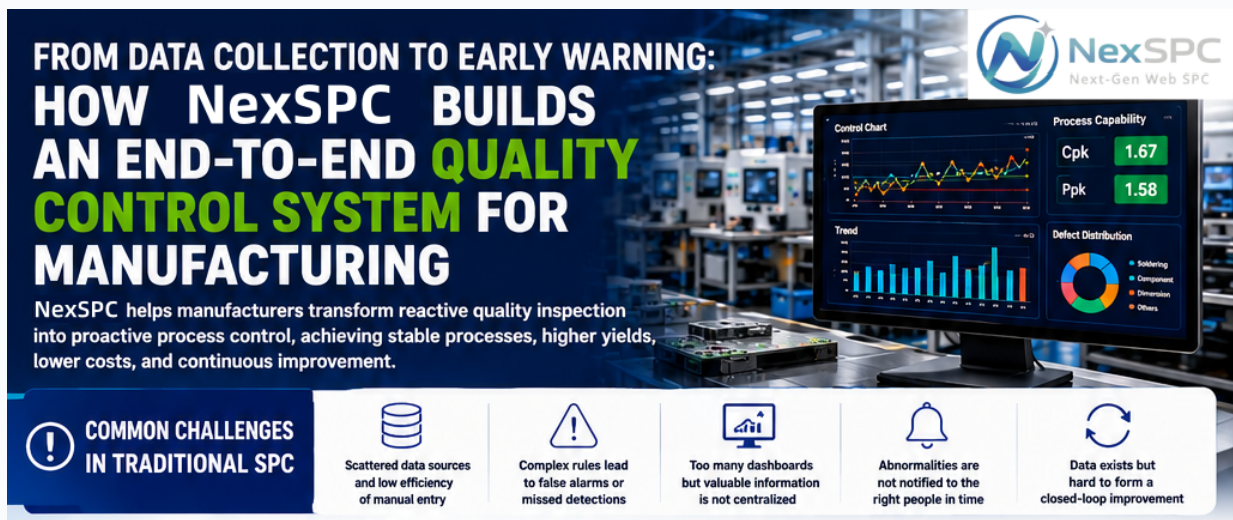
Although many companies have already implemented SPC, they still face common challenges:
- Disconnected data sources and inefficient manual data entry
- Complex SPC rules that generate false alarms or missed detections
- Numerous dashboards with little actionable information
- Slow response after abnormalities are detected
- Large volumes of data but no effective continuous improvement process
To address these challenges, NexSPC has developed a complete quality management framework covering:
Data Collection → Real-Time Monitoring → SPC Analysis → Abnormality Detection → Multi-Channel Alerts → Continuous Improvement
This transforms SPC from a simple control chart tool into the core engine of digital quality management.
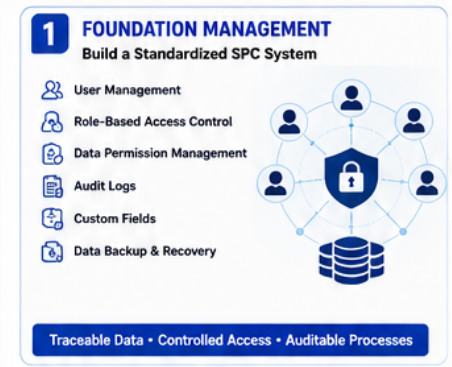
1. Foundation Management: Building a Standardized SPC System
One of the most overlooked aspects of SPC implementation is foundational configuration.
NexSPC provides a unified management platform that helps manufacturers establish a standardized quality management system, including:
- User Management
- Role-Based Access Control
- Data Permission Management
- Audit Logs
- Custom Fields
- Data Backup and Recovery
Through role-based permissions, organizations can ensure that:
- Quality engineers access analysis and reporting functions
- Operators only handle abnormalities related to their workstations
- Managers view enterprise-wide dashboards
- Auditors track all operational activities
This enables: Traceable Data · Controlled Access · Auditable Processes
2. MSA Analysis: Ensuring Reliable Data Before SPC
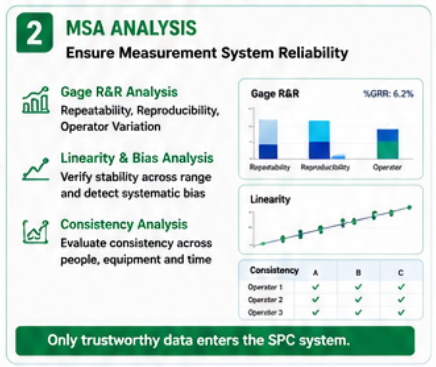
One of the most common mistakes companies make is performing SPC analysis without first validating the measurement system.
If the measurement system is unreliable, all subsequent SPC analysis becomes meaningless.
For this reason, Bingo SPC integrates Measurement System Analysis (MSA) as a critical entry point to quality management.
Gage R&R Analysis
Evaluate:
- Repeatability
- Reproducibility
- Operator Variation
to determine whether the measurement system is capable of supporting SPC analysis.
Linearity and Bias Analysis
Verify:
- Measurement stability across the operating range
- Presence of systematic measurement errors
Particularly important for:
- Precision Manufacturing
- Semiconductor Production
- Automotive Components
- Medical Device Manufacturing
Consistency Analysis
Evaluate measurement consistency across:
- Different operators
- Different instruments
- Different time periods
MSA ensures that:
Only trustworthy data enters the SPC system.
3. Multi-Source Data Collection: Eliminating Data Silos
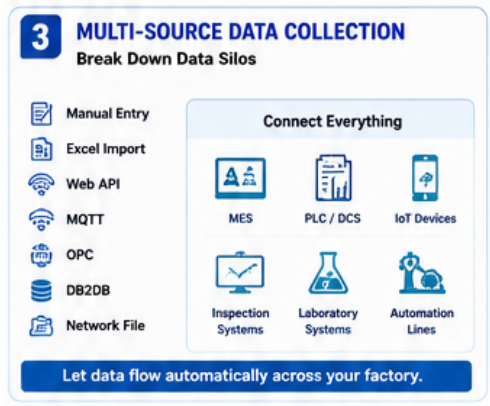
One of the biggest barriers to successful SPC deployment is data acquisition.
Many manufacturers still rely on:
- Excel spreadsheets
- Manual transcription
- Paper-based records
which often lead to delays and inaccuracies.
NexSPC supports multiple industrial data integration methods:
- Manual Entry
- Excel Import
- Web API
- MQTT
- OPC
- Database-to-Database Synchronization (DB2DB)
- Network File Monitoring
Data can be collected from:
- MES Systems
- PLC Controllers
- Automated Production Lines
- Laboratory Systems
- IoT Devices
allowing data to flow automatically throughout the organization.
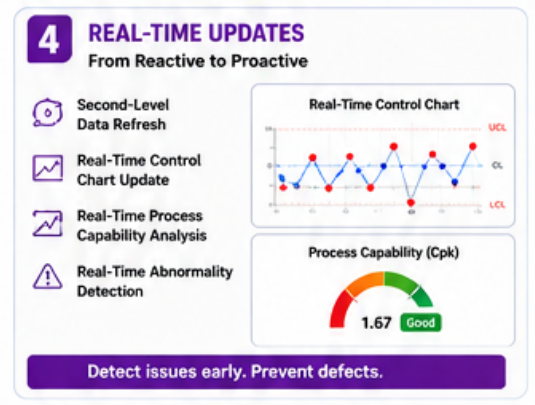
4. Real-Time Updates: Turning Quality Control into Process Prevention
Traditional reporting systems often reveal problems only after they have already occurred.
NexSPC introduces a real-time update mechanism that supports:
- Second-Level Data Refresh
- Real-Time Control Chart Updates
- Real-Time Process Capability Analysis
- Real-Time Abnormality Detection
This enables manufacturers to move from:
Reactive Analysis to Proactive Process Prevention.
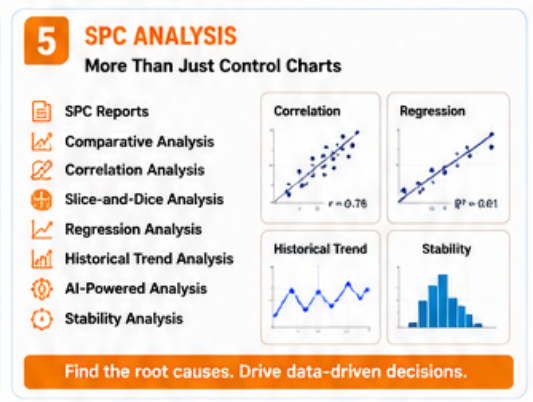
5. SPC Analysis: More Than Just Control Charts
Many people believe SPC is simply about drawing control charts.
In reality, the true value of SPC lies in:
- Understanding process behavior
- Identifying sources of variation
- Predicting quality risks
NexSPC provides advanced analytical capabilities, including:
- SPC Reports
- Comparative Analysis
- Correlation Analysis
- Slice-and-Dice Analysis
- Regression Analysis
- Historical Trend Analysis
- AI-Powered Analysis
- Stability Analysis
These tools help manufacturers identify:
- Sources of variation
- Process abnormalities
- Equipment drift
- Parameter relationships
For example, when product yield declines, the system can quickly determine whether the issue is related to:
- Temperature changes
- Equipment parameter shifts
- Specific production shifts
- Long-term process drift
This enables organizations to move from:
Experience-Based Decisions to Data-Driven Decisions.
6. Real-Time Monitoring and SPC Dashboards
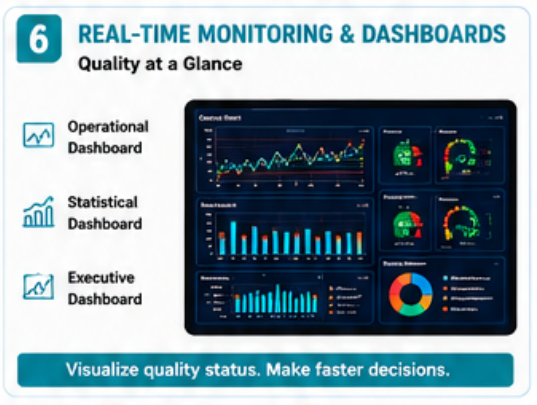
To help manufacturers gain instant visibility into production performance, NexSPC provides multiple dashboard types:
- Real-Time Operational Dashboards
- Statistical Analysis Dashboards
- Executive Summary Dashboards
Operators can instantly view:
- Current process status
- SPC rule violations
- Process trends
- Process capability
- Abnormality distributions
Managers can quickly identify:
- Which production lines generate the most abnormalities
- Which workstations exhibit the greatest variation
- Which issues occur most frequently
- Overall factory quality performance
This creates a truly visualized quality management environment.
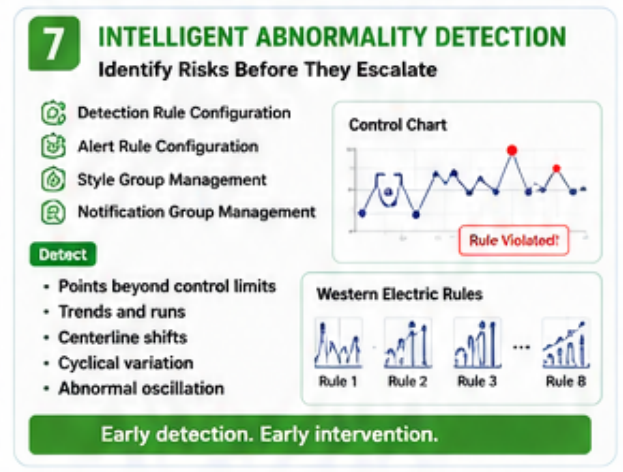
7. Intelligent Abnormality Detection
One of the core functions of SPC is abnormality detection.
NexSPC supports:
- Detection Rule Configuration
- Alert Rule Configuration
- Notification Group Management
- Style Group Management
Manufacturers can configure:
- Western Electric Rules
- Trend Detection Rules
- Continuous Shift Rules
- Long-Term Drift Detection
- High-Frequency Oscillation Identification
The system automatically identifies:
- Points beyond control limits
- Consecutive upward or downward trends
- Cyclical variation
- Centerline shifts
- Abnormal oscillations
This allows quality risks to be detected and controlled before they escalate.
8. Closed-Loop Exception Management
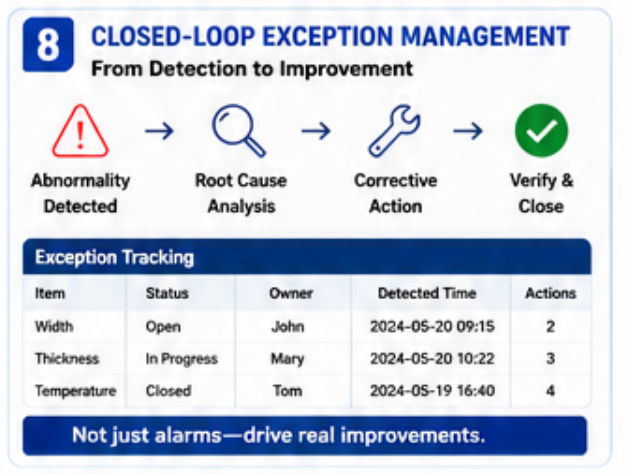
Many systems can generate alarms, but few support continuous improvement.
NexSPC not only detects abnormalities but also provides complete exception management capabilities:
- Exception Registration
- Status Tracking
- Assigned Responsibility
- Corrective Action Records
- Historical Traceability
For example:
When an abnormal point appears on a control chart:
- The responsible person is notified automatically.
- Engineers investigate the root cause.
- Corrective actions are documented.
- The abnormal status can be closed after verification.
This ensures that problems are not only detected—but also resolved.
9. Multi-Channel Alert Notifications
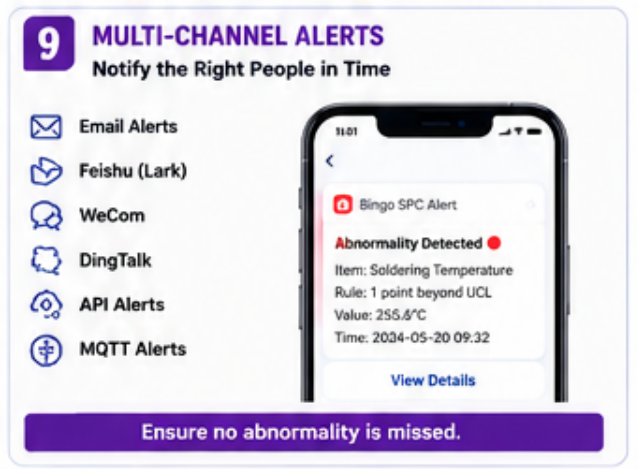
To prevent abnormalities from being overlooked, NexSPC supports multiple notification channels:
- Email Alerts
- Feishu (Lark) Notifications
- WeCom Notifications
- DingTalk Notifications
- API-Based Alerts
- MQTT Alerts
When an abnormality occurs, the system automatically pushes:
- Abnormality details
- Control chart information
- Triggered SPC rules
- Current measurements
- Time and location data
to the appropriate personnel in real time.
The goal is simple: No abnormality should remain unnoticed overnight.
10. NexSPC: More Than a Quality Tool
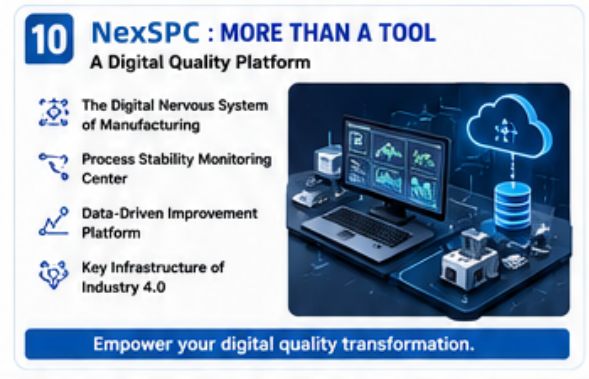
For modern manufacturers, SPC is no longer just a quality tool.
It has become:
- The digital nervous system of manufacturing
- A monitoring center for process stability
- A data-driven improvement platform
- A key infrastructure component of Industry 4.0
Through the combination of:
Data Collection + Real-Time Monitoring + Intelligent Analysis + Early Warning + Closed-Loop Improvement
NexSPC helps manufacturers establish a true end-to-end quality control system.
Conclusion
In the Industry 4.0 era, competitive advantage increasingly depends on:
- Process Stability
- Quality Predictability
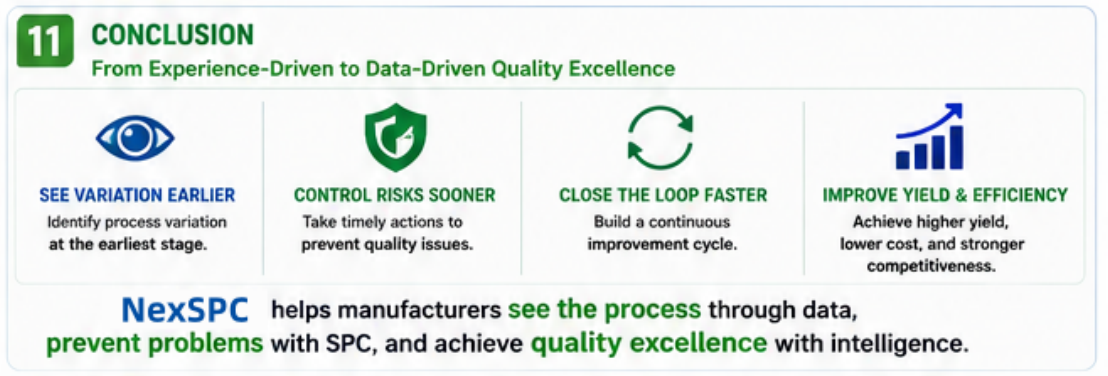
The sooner a manufacturer detects process variation, the sooner it can control risk.
The faster an organization closes the improvement loop, the faster it can improve yield, efficiency, and customer satisfaction.
NexSPC is committed to helping manufacturers:
- See the process through data
- Prevent problems through SPC
- Accelerate quality improvement through intelligent technologies
By transforming quality management from:
Experience-Driven → Data-Driven
and from:
Reactive Correction → Proactive Prevention
NexSPC empowers manufacturers to build sustainable competitive advantages through digital quality management.
